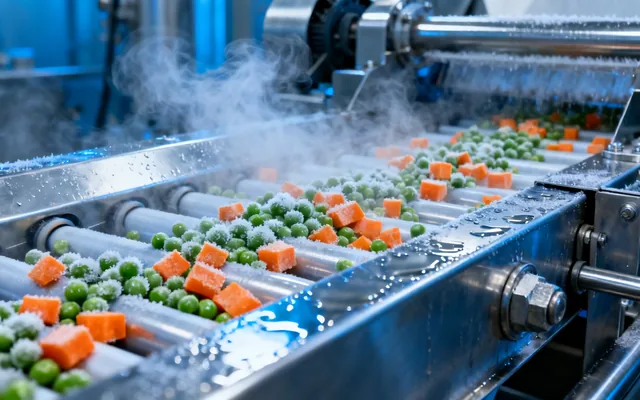
Vegetable IQF Plants
Peas, beans and diced root crops need belt loading discipline and about -35 C core targets. Prep wash and cut modules sit upstream so foreign material stays out of the freezer tunnel.
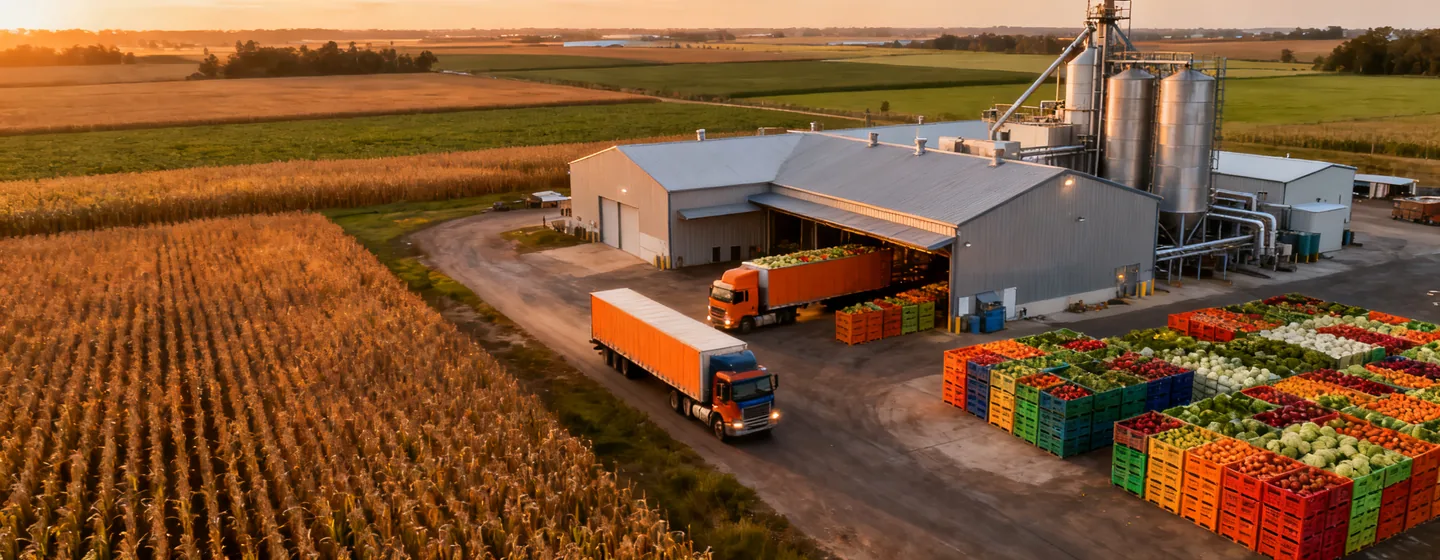
Industries
From vegetable IQF plants to poultry chill rooms, each scene needs different retention times, hygiene zoning and pack formats. Explore the applications below, then ask for a shortlist matched to your crop plan.
Peas, beans and diced root crops need belt loading discipline and about -35 C core targets. Prep wash and cut modules sit upstream so foreign material stays out of the freezer tunnel.
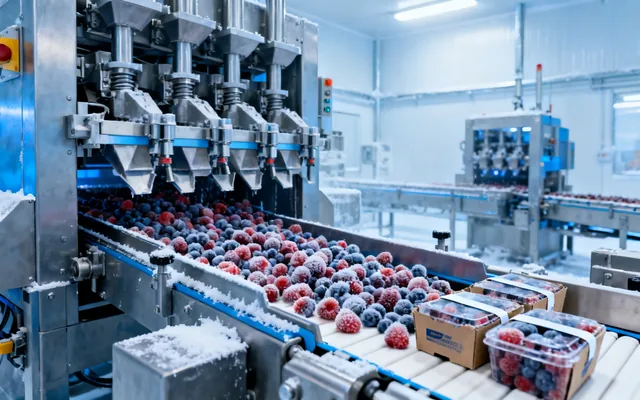
IQF berries and stone-fruit pieces move from freezer exit to weigh-fill with metal detection. Pack formats from 0.5 kg retail to 10 kg foodservice stay on the same hygiene spine.
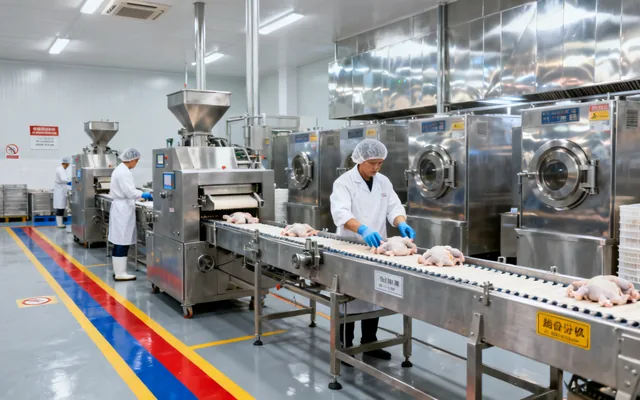
Chill curves, wet-area zoning and batch traceability matter as much as throughput. Marel advisors keep carcass chill modules aligned with packing and freezing downstream.
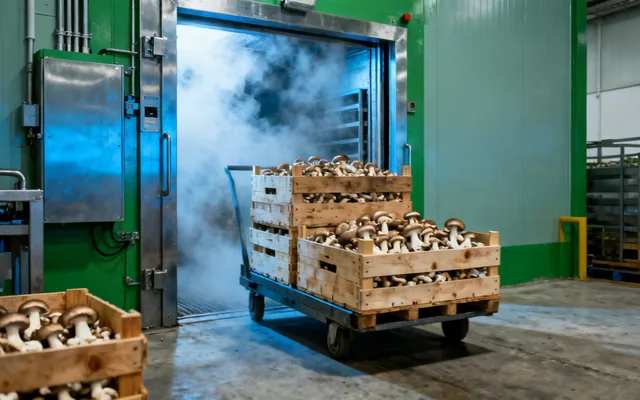
Delicate caps prefer gentle blast chill before packing. Moisture targets and short dwell times protect texture while still meeting export cold-chain windows.
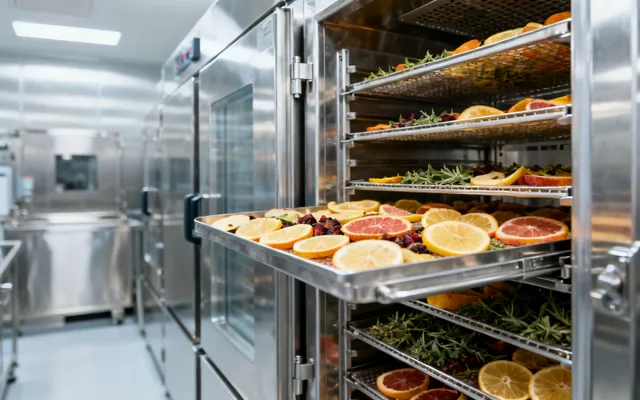
Herbs and high-value fruit slices use freeze dryer bays with vacuum cycle logs. Moisture reporting pairs with lot codes for buyers who audit every shelf load.
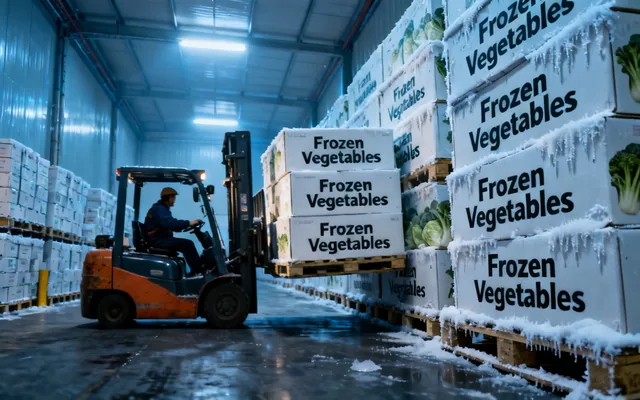
When freezing feeds long-haul export, carton integrity and metal-detection records travel with the lot. Line design anticipates dock staging without thawing risk.
Field notes (illustrative plant briefs)
Background: A mid-size vegetable plant feeding export cartons saw peak-week intake near 8 t/h while the freezer was still sized on season averages.
Process: Advisors logged belt loading and core probes at about -35 C, then cut belt load density and added a prep wash CCP upstream.
Result: First commercial week held core temperature without cold-store queueing; HACCP tables reused the same retention notes procurement had reviewed.
Background: A frozen fruit packer moved from 10 kg foodservice only to mixed 0.5–10 kg formats on the same hygiene spine.
Process: IQF exit to multihead weigh-fill was mapped with metal detection placement before CapEx; blast cells were rejected because pieces needed to stay free-flowing.
Result: One tunnel shortlist covered both pack formats; retailer audit questions arrived with CCP maps already written.
Background: A poultry processor needed chill curves aligned with a downstream freeze step without reworking wet-area zoning.
Process: Commissioning staged carcass chill modules first, then confirmed batch traceability tags before freezing capacity talks.
Result: Hygiene zoning stayed intact; freeze CapEx waited until chill logs proved the takt the packing room could feed.
Continuous IQF freezing suits free-flowing peas, berries and diced vegetables when buyers need individual pieces for weigh-fill packing. Retention time and belt loading become the control points for a -35 C core target.
Batch blast cells suit carton stacks, tray packs or products that cannot tumble on a belt. Cycle pull-down maps replace belt retention tables, and airflow around pallets matters more than piece geometry.
Marel advisors score both against peak harvest tonnes, cold-store dwell time and HACCP CCP placement so CapEx follows the pack format you already sell. Export cold stores add carton integrity and metal-detection records that must survive dock staging; GLOBALG.A.P. or retailer audits belong in the shortlist, not as a late add-on.
Tell us which application above fits your plant. We return throughput ranges, freezing temperature notes and documentation scope before you commit CapEx.